


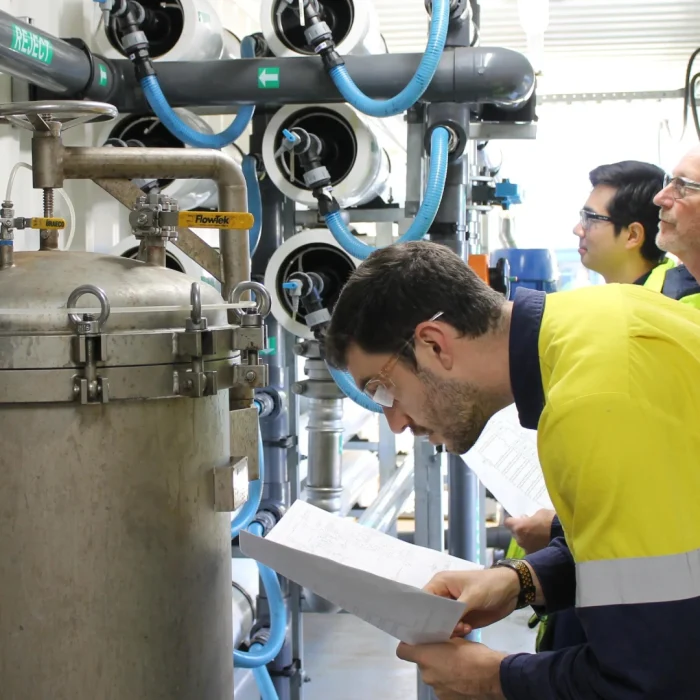
Water Treatment Operator Training prepares facility employees to do more than complete a testing checklist. It helps them understand what normal system performance looks like, recognize changes that require attention and communicate useful information through customized water treatment training before a developing water issue contributes to larger equipment problems.
Operators are often the people closest to a facility’s boilers, cooling equipment and closed-loop systems. Through rounds, testing and logbook entries, they may notice the first signs of an unexpected change. The value of training lies in helping them connect those observations to the fundamentals of water chemistry and the facility’s established response procedures.
Why Early Water-Treatment Warning Signs Matter
Corrosion, scaling, fouling and contamination do not always begin with an obvious equipment failure. Their early signs may appear as a change in test results, an unusual pattern in system performance or a condition that keeps returning after treatment.
If those changes are missed or poorly documented, a facility may lose valuable time before the issue is investigated. Over time, poor water conditions can contribute to reduced heat transfer, restricted flow, increased maintenance and deterioration of metal components.
Operators do not need to diagnose every concern independently. They do need enough knowledge to recognize when a result or observation falls outside the expected pattern and know who should receive that information.
Water Treatment Operator Training Builds Practical Awareness
Useful Water Treatment Operator Training connects scientific principles to everyday plant responsibilities. Operators should understand the purpose of testing—not simply how to carry it out.
Training may help participants recognize and communicate observations such as:
- Test results moving outside the facility’s established operating range
- Readings that change repeatedly or trend in the wrong direction
- Evidence of scale, deposits or corrosion during accessible inspections
- Unusual changes in the appearance or clarity of water
- Differences in flow, pressure, temperature or heat-transfer performance
- Chemical feed or testing equipment that does not appear to operate normally
- Incomplete logs, inconsistent sampling or missed treatment tasks
These signs do not automatically identify a cause. They indicate that the condition should be documented, communicated, and assessed in accordance with the facility’s procedures.
From Accurate Testing to Better Decisions
Good decisions depend on dependable information. If samples are collected inconsistently, testing methods vary between shifts or results are recorded without context, it becomes harder to determine whether water conditions are actually changing.
Operator training can reinforce a consistent routine:
- Use the correct sampling methods.
- Perform the correct water treatment tests.
- Record the result, time and relevant operating conditions.
- Compare the reading with the site’s targets and previous trends.
- Report abnormalities through the established chain of communication.
- Record follow-up actions so the next shift understands what occurred.
This creates a stronger operational record. It also gives supervisors, maintenance personnel and water-treatment specialists better information when deciding what investigation or corrective action is appropriate.
Why Generic Operator Training Has Limits
Two facilities may use similar boilers or cooling systems but still have different water-treatment needs. Source-water quality, equipment age, operating load, chemical programs, testing equipment and internal procedures can all affect what employees need to monitor.
Participating in power engineering courses and training can introduce the principles of pH, hardness, corrosion and chemical treatment. However, operators also need to understand how those concepts relate to their own sampling points, logs, equipment and responsibilities.
Site-specific examples make technical ideas easier to apply. An operator can learn where a sample is taken, what the expected range is, how often it is tested, where the result is recorded and what happens if the reading is abnormal. This helps turn theoretical information into a repeatable workplace practice.
Create Consistent Practices Across Shifts
Water-treatment tasks may be performed by several people working different schedules. Without consistent training, employees may use different testing methods, record information differently or have different ideas about when a concern should be reported.
A customized on-site operator training helps establish a shared foundation across the team. It can support clearer shift handovers, more useful logbook entries, and better communication among operators, maintenance personnel, supervisors, and external treatment providers.
Training should complement the facility’s approved procedures and chemical supplier guidance. Operators should only perform adjustments and corrective actions that fall within their training, authority and site requirements.
Bring Water Treatment Operator Training to Your Site
TFM Consultants International develops customized water-treatment programs for facilities operating boilers, closed-loop heating systems, cooling systems and other water-dependent equipment. Course content can address water chemistry, corrosion prevention, scale and fouling control, testing, result interpretation, troubleshooting, chemical handling and long-term asset protection.
Before delivering the program, TFM reviews the facility’s needs so the training reflects its equipment, operating conditions and day-to-day challenges. Where appropriate, an on-site system review or walkthrough can be incorporated to reinforce learning in the participants’ actual work environment.
Learn more about TFM’s Customized Water Treatment Training Program or contact the team to discuss Water Treatment Operator Training for your facility.