


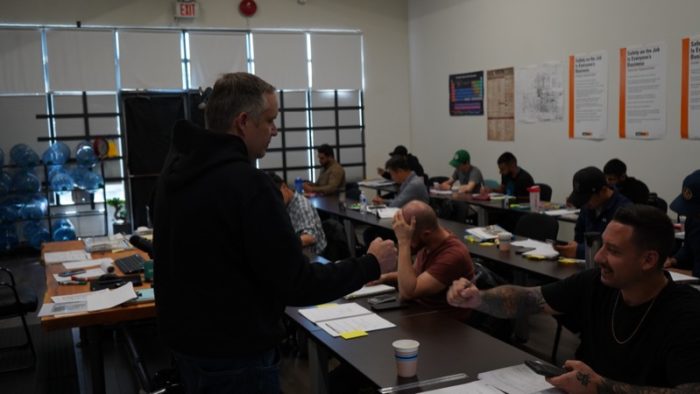
If you are ready to take your career in a new direction, plant operations or mechanical facility management could be your next step. Power engineering is an exciting and rewarding path—it supports essential sectors like energy, manufacturing, health care, and food processing, while offering stable, long-term roles nationwide.
Begin by completing power engineering courses to build foundational knowledge of boilers, refrigeration, pressure equipment, and plant operations. Today, you can choose online or in-person training, both of which prepare you for the same provincial certification exams. For career changers, the best option depends on how quickly you want to transition, how much study time you have while working, and which environment keeps you engaged.
Power Engineering Courses
Whether you study online or in person, credible power engineering programs cover similar core material, such as:
- Boiler operation and steam systems
- Refrigeration systems and plant equipment
- Pressure vessels, code requirements, and safety systems
- Thermodynamics and heat transfer
- Plant maintenance, operating procedures, and hazard awareness
These topics empower you to tackle provincial exams (such as Technical Safety BC) and pursue exciting roles, such as4th Class Power Engineer, depending on your program. With a standardized curriculum, the main difference for career changers is choosing the program format that best fits and energizes your life.
Why Online Training
If you are changing careers, you’re likely already managing personal responsibilities or a demanding job. You can keep earning while retraining, studying during evenings, days off, or between shifts. Our virtual attendance option allows you to learn in the comfort of your own home, on the job site, or anywhere else with a reliable internet connection. You avoid relocating or lengthy commutes, which is crucial if you live outside major centers.
TFM empowers you to redefine your career with online or part-time power engineering courses crafted for those already in the industry or exploring new fields. For many career changers, this accessible approach makes the transition not just financially practical, but also truly exciting: you can confidently gain new skills and open doors to new opportunities even before leaving your current role.
Questions to Help You Choose
- Can I afford to step away from my current job for 6–12 months?
- Do I learn best independently, or do I need the structure of scheduled classes?
- Am I able to relocate or commute to a classroom, or do I need to stay where I am?
- How quickly do I want to complete my theory and become exam‑ready?
Moving Forward with Confidence
There is no single correct route into power engineering. Both online and in‑person programs can lead you to the same destination: a rewarding new career in plant operations and the satisfaction of mastering vital skills.
For many career changers, flexible online training allows you to start now, not “someday.” Others may prefer an intensive in-person program for a quick transition. The key is to choose a format you can sustain, so you finish courses, pass exams, and confidently begin your next career.
With dedication and the right support and training from an organization like TFM Consultants, the possibilities for advancement are vast and endless. Contact our admissions office to learn more about programs, courses, and enrollment. Take the first step today, and see just how far a career in power engineering can take you.