


The day-to-day work of a 4th class power engineer is guided by standard operating procedures and daily logbooks. Power engineers are responsible for operating and maintaining low-pressure and high-pressure boilers and plant equipment.
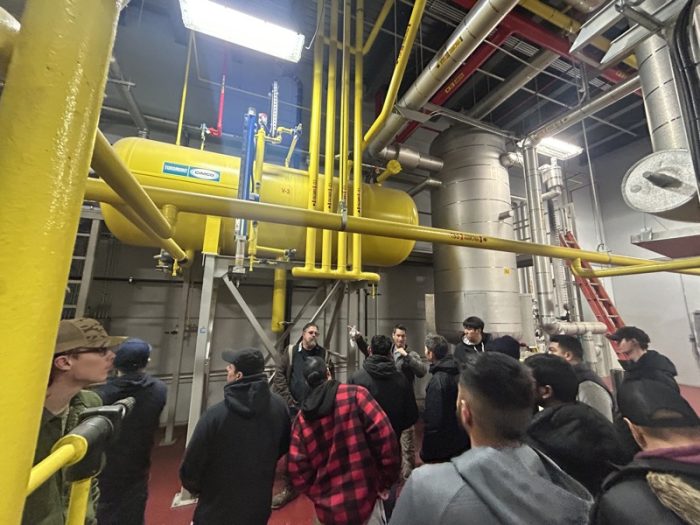
Hands-on training courses like those at TFM introduce the theory behind boilers, refrigeration systems, and plant operations while also demonstrating with real-world examples. We provide you with the knowledge that accelerates your success once you enter a working facility.
Every shift involves far more than watching gauges. Power engineers monitor equipment, document operations, maintain safety procedures, and keep the entire plant running reliably.
Understanding how a shift unfolds helps new operators build confidence and develop the habits needed for safe, consistent performance.
Communication and Handover
Every shift begins with a handover between the outgoing and incoming engineer. This exchange shapes the tone for the entire day. At the start of every shift, the operator reviews:
- Equipment performance
- Alarms or unusual conditions
- What maintenance was completed
- Issues that still require attention
Afterward, the incoming engineer reviews the logbook to confirm activities and ensure nothing is missed before taking on their responsibilities for the next shift.
Reviewing the Logbook
The logbook ranks among the most valuable tools in a power engineer’s shift. It documents the official record of how regulated equipment, devices, or systems governed by safety or legal standards are operated. Entries typically include:
- Startup and shutdown procedures
- Pressures, temperatures, and key readings
- Water treatment activities
- Equipment inspections
- Alarms or abnormal events
- And maintenance
Accurate documentation guarantees compliance and equips the next operator to understand the shift.
Inspections
Before settling in, engineers walk through to confirm normal equipment operation and spot overlooked issues. During this check, operators look for:
- Leaks
- Unusual noises
- Abnormal equipment behaviour
Identifying and resolving small issues early avoids major operational problems.
Doing Rounds
Once systems are stabilized, engineers perform regular rounds to monitor plant performance. These checks may include:
- Steam pressure and water levels
- Temperature readings
- Burner flame conditions
- Pump and motor performance
These findings are recorded and compared with readings throughout rounds to confirm stable operation and catch changes early.
Alarms or Operational Issues
If an alarm triggers, the problem must be diagnosed quickly and safely. Depending on the issue, they may execute minor repairs, alert maintenance, or contact the chief engineer. Calm, informed decision‑making strengthens with experience.
A 4th class power engineer’s shift maintains safe, reliable operations. Inspections, rounds, documentation, and troubleshooting support the facility’s stability. Understanding this workflow builds confidence and professionalism in new engineers.
SOPs and Documentation
Safe, consistent operations depend on clear instructions and confident staff. Along with training 4th class power engineers, TFM’s consulting services develop site‑specific Standard Operating Procedures (SOPs) and Standard Work Instructions (SWIs) that reflect the actual layout, equipment, and process conditions at each facility.
The Right Training From TFM
TFMs 4th Class Power Engineer course starts May 25, 2026 and runs until June 19, 2026.
Classes fill up fast. Enroll while you can. If you require additional information about any of our programs or services, contact us at info@tfmci.com or by calling 778-873-1050.