


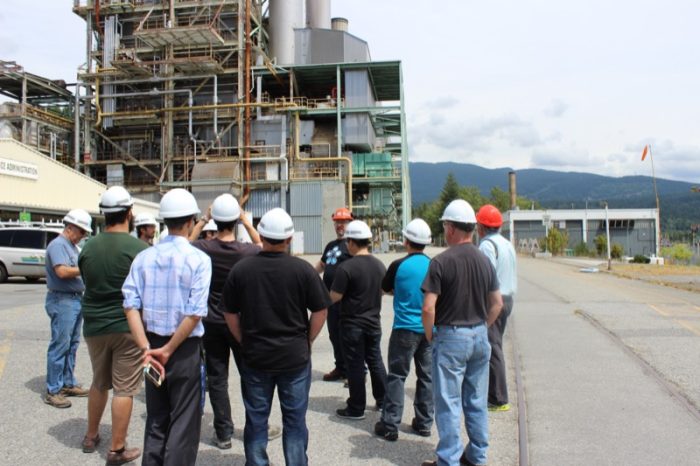
If you want to become a power engineer but aren’t sure what the job involves, you’re not alone. Power engineers help keep everything running smoothly, from office buildings to your local elementary school. They understand boilers and refrigeration systems, ensuring they operate efficiently and safely for everyone.
Many people aren’t sure what a power engineer does, and sometimes mix it up with electrical engineering. That’s understandable. We’re here to explain what you need to know and how you can start your journey in 5th class power engineering.
TFM (Total Facilities Management) Consultants International specializes in power engineering and facilities management. We have years of experience managing plant operations in pulp mills, petrochemical and forestry industries, and large buildings across Canada.
When you’re ready to start a new career as a 5th-class power engineer, our courses will help you prepare for exams, certification, and everything else you need to begin.
What is a Power Engineer?
A power engineer is a certified professional who safely operates and maintains mechanical systems that produce or distribute heat, steam, power, and refrigeration. In Canada, provincial authorities regulate this field, and only certified power engineers can legally run certain pressure equipment.
Power engineers work with equipment like high-pressure boilers, steam turbines, and generators. These machines can be dangerous if not handled properly, so power engineers make sure everything runs safely and efficiently.
Do You Need a Degree to be a Power Engineer?
The short answer is no! You don’t need a university degree to become a power engineer in Canada. This career is based on certification, not a degree, so it’s open to anyone interested in hands-on technical work.
In Alberta and British Columbia, you need to complete an approved program such as those offered by TFMCI before you can write the 5th-class provincial exam. Other provinces have different rules, and some let people with relevant work experience take the exams directly.
For example, if you have a degree in mechanical or marine engineering, you might be able to challenge certain certification levels, depending on how the provincial authority reviews your credentials. Still, a degree isn’t required.
An Overview of Power Engineering Classes
TFM Consultants’ power engineering courses are designed for both beginners and experienced professionals. We offer in-person and online classes that cover the basics and move into advanced topics, so you can build a strong foundation and grow your skills as your career develops.
If you’re just starting out, our 5th class power engineering courses teach you the basic theory through demonstrations, lectures, visual presentations and exercises. We focus on safety, critical thinking, and teamwork, all of which are important when working with thermal energy.
When you enroll online, you can join live classes alongside in-person students. A classroom camera lets online students ask questions in real time, so there’s no need to come in. This setup is perfect for students outside the province who can’t travel to attend.
Enroll In Your Future With TFM
Enrolling in TFM’s online courses is easy. This accessible option makes it both affordable and exciting to start a career in power engineering. You can gain new skills and explore new opportunities without leaving your current job.
With dedication, support, and training from TFMCI, you’ll find many opportunities for career growth across Canada. Contact our admissions office to learn more about our programs and how to enroll. Take the first step today and discover where a career in power engineering can lead you.