


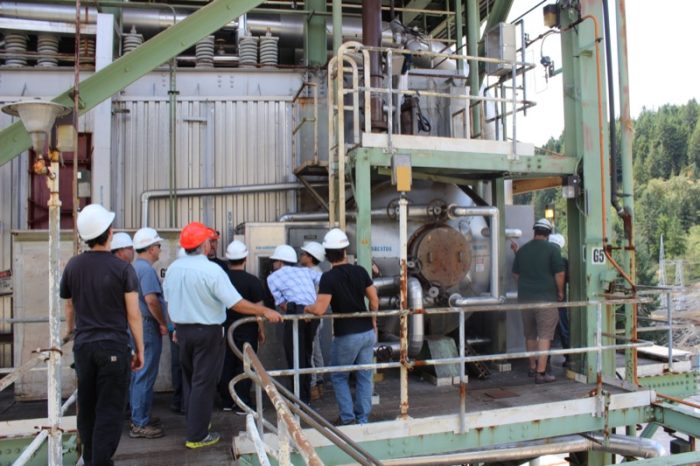
Earning your 5th Class Power Engineer certificate is a solid first step into industrial plant operations. You’ll pick up the basics of boilers, safety, and running regulated equipment. This certificate helps you get started quickly and begin gaining the experience you’ll need to advance your career.
Advancing to a 4th Class Power Engineer helps you grow your technical skills and qualify for jobs in a wider range of facilities. It requires more education, exams, and hands-on experience, but it’s a strong move for your career.
Understanding the differences between these certifications can help you decide if Fourth Class training is the right choice. Keep reading to find out if you’re ready for the next step in your power engineering career.
What Does a 5th Class Power Engineer Do?
A 5th class power engineer learns the basics of operating boilers and plant equipment. Depending on your province and workplace, you might inspect equipment, monitor operations, keep records, and help maintain safety.
Daily Responsibilities and the Industrial Mindset
During a typical shift, a 5th Class Power Engineer monitors boilers, steam systems, and utilities. They inspect equipment, log readings, and watch for early signs of problems. This certification helps you develop a focus on safety and reliability, teaching you to follow procedures and know when to report issues.
A Foundational Step for Career Changers
For many people, the 5th Class course is a practical way to start, even without a mechanical background. Students often come from construction, manufacturing, or other fields to find steady work in these regulated jobs. It’s a quick way to start earning a full wage while gaining the experience needed for higher certification.
5th Class Power Engineers often work in places such as:
- Commercial buildings
- Schools and universities
- Community recreation centres
- Small manufacturing facilities
- Apartment and condominium complexes
- Agricultural and food facilities
What you can do with a 5th Class certificate depends on your province. However, the experience you gain at this level helps you build real skills in equipment checks, safety, and daily plant routines.
Why Advance to 4th Class Power Engineer?
4th class power engineering training deepens your understanding of plant systems, equipment, and their operation. Many employers see it as the standard entry-level certification for long-term careers, often listing it as the minimum requirement for full-time operations jobs. 4th Class Power Engineers are also more commonly employed as Chief Engineers, a more senior and higher paying role. By advancing your certification, you open up new career opportunities, such as:
- Positions in larger or more complex facilities.
- Better understanding of boilers and other additional equipment.
- More operating responsibilities.
- Access to industrial and commercial career opportunities.
- A strong foundation to advance your career even further.
- Ability to operate any size and type of refrigeration system.
Your opportunities will depend on your experience, location, and what employers are looking for. Even so, you’ll be able to pursue roles that weren’t available to you before.
The Curriculum: Mastering Parts A and B
The 4th Class curriculum has two main parts, which you can take in any order. Part A covers technical and theoretical topics such as boiler fundamentals, thermodynamics, combustion, and safety. Part B delves into additional systems such as compressors, as well as how systems interact and how to make operational decisions.
Mastery of Complex Systems and Equipment
Students build strong practical and technical skills in several systems:
- Boilers and Auxiliaries: Including safety devices, water treatment, and operational procedures.
- Refrigeration: 4th Class engineers are qualified to operate regulated refrigeration plants of any size, a major expansion of scope compared to 5th Class engineers.
- Auxiliary Systems: Mastering pumps, compressors, lubrication, and prime movers.
- Instrumentation and Controls: Managing the computers and devices that monitor plant safety.
Broadening Career Horizons and Remote Opportunities
Upgrading your certification can boost your earning potential, with salaries often between $60,000 and $90,000, and sometimes over $110,000 in some sectors. Many 4th Class Power Engineers find well-paid jobs in remote camps in places like Northern BC and Alberta.
Understanding the 4th Class Certification Process
Each province has its own process for power engineer certification. However, the typical steps to get your 4th class certificate are:
- Meeting the eligibility requirements established by the provincial safety authority.
- Completing an approved Fourth Class Power Engineering course or another accepted educational pathway.
- Passing the required certification examinations.
- Completing and documenting qualifying operating experience.
- Applying to the provincial safety authority for certification.
Before you sign up for a course, check the latest requirements for the province where you want to work. If you’re in British Columbia, look up Technical Safety BC for details on approved courses, exams, and experience. Learning about the process in advance can help you plan your education and work experience, so you avoid unexpected problems.
The Value Proposition
The 4th Class certification is often seen as one of the best values in the field. It helps you move from entry-level roles to supervisory positions by providing the credentials you need. With a 4th Class ticket, you can work as a Chief Engineer for 4th and 5th Class plants or as a Shift Engineer in larger 3rd Class facilities, and gain more experience for higher certifications.
Take the Next Step With TFM
TFM Consultants International focuses on Power Engineering education. As the only school in Canada dedicated solely to power engineering training and facility safety management, TFM offers a unique setting for specialized learning. Our courses are taught by industry professionals who work as power engineers, helping you connect technical theory to real-life plant operations.
The TFM Advantage: Real-World Readiness
TFM’s teaching approach covers both technical skills and important soft skills needed in the workplace. Our work experience program is designed to match a real operator’s shift, including using daily logbooks and doing daily tasks. This practical focus helps students leave ready to safely and effectively manage real facilities.
Learning for Busy Professionals
Recognizing the needs of working professionals, TFM offers a flexible blended learning model. Online courses offer the convenience of self-paced study, supplemented by live Zoom classes. This allows students to ask questions in real-time, interact with instructors, and collaborate with peers across Canada without pausing their lives.
TFM’s 4th class power engineer Part A and Part B courses provide the knowledge you need for your next certification. You’ll also get support with exam preparation, course materials, and information about hands-on experience.
Your 5th Class certificate is only the beginning of a rewarding career in power engineering. By continuing to learn, gaining hands-on experience, and understanding your province’s rules, you’ll be prepared for more responsibility and new opportunities.
Ready to move forward? Explore TFM’s 4th class power engineering courses, view the upcoming schedule, or contact our team to discuss your training options.