


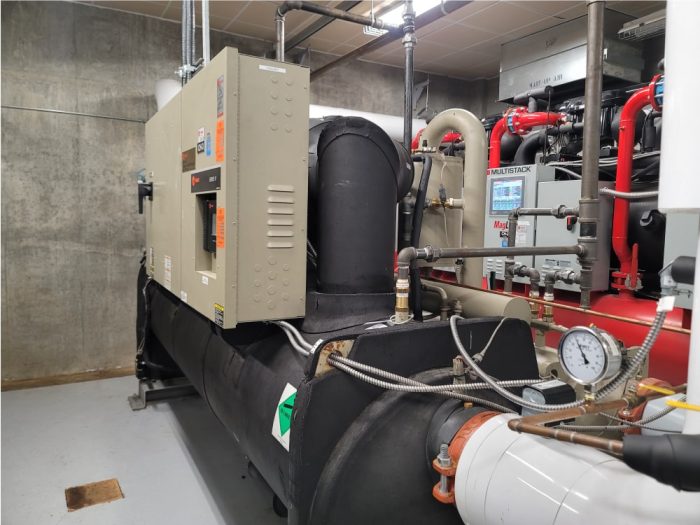
Boiler and refrigeration systems are among the most common types of regulated equipment found in industrial, commercial, and municipal facilities. Although both are essential for some plant operations, they serve distinct purposes and require different skills, procedures, and certifications.
Power engineers may work with one or both systems, depending on the facility. Boilers generate heat and steam, while refrigeration systems remove heat for cold storage and climate control. Understanding the differences clarifies why specialized power engineering training exists.
Boiler Operation: Heat and Steam
A boiler heats water to produce steam. This energy is used for heating, sanitation or industrial processes. Boilers are commonly found in:
- Commercial building: hospitals, schools, office buildings
- Industrial Facilities: mills, chemical plants,
- Food Processing operations
Boiler Operation Responsibility
Boiler operators must keep the system within safe operating limits. Their duties typically include:
- Monitoring steam pressure and temperature
- Maintaining proper water levels
- Performing blowdowns
- Adjusting and testing water
- Pumps, burners and valve inspections
Boilers are regularly subjected to high pressure and temperature; for safety, it’s essential to strictly adhere to procedures.
Refrigeration Operation: Take Away Heat
Refrigeration systems do the opposite of boilers. They remove heat to keep spaces cold using refrigerants, like ammonia or freon. Refrigeration systems are used in:
- Ice rinks and arenas
- Distribution and cold storage centres
- Food manufacturing plants
- Grocery facilities
- Commercial buildings
Though similar to household refrigerators, industrial systems are larger and require a trained and certified 4th class power engineer or refrigeration plant operator.
Refrigeration Operation Responsibilities
Refrigeration operators ensure the system runs safely and efficiently. Their tasks may include:
- Monitoring system pressures and temperatures
- Confirming refrigerant levels
- Inspecting compressors, pumps, and condensers
- Checking valves and safety systems
- Responding to alarms or abnormal conditions
Because refrigerants are pressurized and can pose health and environmental risks, refrigeration operators must follow strict safety procedures.
Training and Certification Requirements
Certification determines what equipment an operator is legally qualified to run.
- Refrigeration Plant Operators can operate any sized refrigeration plant, but are not qualified to operate boilers.
- 5th Class Power Engineers can operate small boiler systems, but not refrigeration plants.
- 4th Class Power Engineers may operate both systems depending on facility classification.
Training programs combine theory with hands‑on experience to ensure operators understand system operation, safety, and regulatory requirements. Understanding the differences in qualification is key before moving on to the broader significance for employers and facilities.
The Differences Matter
For employers and facility managers, understanding the difference between boiler and refrigeration operation is essential for staffing, compliance, and risk management. Facilities that rely heavily on heating or cooling should prioritize hiring operators with specialized expertise.
Finding the Right Career Path
Boiler and refrigeration systems both fall under power engineering, but their operation requires different skills. For new engineers, understanding these differences guides your certification choice. For facilities, having trained operators ensures safe, reliable, and efficient operation.
Ready to Become a Power Engineer?
TFM trains 4th- and 5th-class power engineers for real-world applications. Our courses cover everything from theory to practical hands-on training from industry experts. Contact TFM today to register for the next 5th class power engineering course.